 murido
Grief Myths: What People Get Wrong About Loss


When someone dies, the people around you often reach for something to say. Many of the phrases they find are handed down from older ideas about grief, ideas that sound sensible but do not hold up well against what grieving people actually live through. Some of these myths are harmless. Others can leave you feeling like you are failing at something that has no rules.
This guide walks through some of the most common myths about grief and offers a more honest picture in their place.
Myth 1: Grief happens in five neat stages
The five stages of denial, anger, bargaining, depression, and acceptance are probably the best known idea about grief. They were originally drawn from observations of people facing their own terminal illness, not people grieving someone else, and they were never meant to be a strict sequence.
In reality, grief looks more like a tangle than a staircase. You might feel acceptance on Monday and fury on Thursday. You might never feel bargaining at all. Expecting stages can make people worry they are stuck or doing it out of order.
The truth: grief has common experiences, but there is no correct order and no checklist. We explore this further in Beyond the Five Stages.
Myth 2: There is a normal timeline
Many people feel pressure, from others or from themselves, to be "better" after a certain amount of time. Six months. A year. The first anniversary.
Grief does not keep a calendar. Some people feel the heaviest grief years after the loss. Many people carry some form of grief for the rest of their lives, and it changes shape rather than ending. That is not a problem to fix.
The truth: grief usually softens over time, but there is no deadline, and carrying grief for a long time is common. See How Long Does Grief Last? for an honest look.
Myth 3: Strong people do not cry
This myth is especially common for men, eldest children, and anyone who feels responsible for holding others together. Crying gets treated as weakness or a loss of control.
Crying is one of the ways the body releases stress and expresses love. People who do not cry are not stronger. People who do cry are not weaker. Both are simply grieving in their own way.
Holding it together is not the same as healing. Sometimes the strongest thing you can do is let it fall apart for a while.
Myth 4: Staying busy is the best cure
Work, projects, and errands can be a lifeline in early grief. Having something to do with your hands helps many people get through the day.
The problem comes when busyness becomes the only strategy. Grief that is never given room tends to wait. It shows up later, sometimes in the body, sometimes in sudden floods of emotion, sometimes as a numbness that will not lift.
The truth: distraction is a useful tool, but grief also needs some time and space to be felt.
Myth 5: Moving on means letting go
Many people are told that healthy grief means letting go of the person who died. For many grieving people, this feels impossible and wrong.
Research on continuing bonds suggests that staying connected, through memories, rituals, conversations, and carrying their values forward, is common and often healthy. You can build a full life while still loving the person who died. Read more in Continuing Bonds.
Myth 6: If you are not sad all the time, you did not love them enough
Grief often arrives in waves. Between the waves, there can be ordinary moments, laughter, even joy. Some grieving people feel guilty about this, as if a good afternoon betrays the person they lost.
Moments of lightness are not disloyalty. They are part of how people survive grief. The mind cannot hold intense pain every minute, and it is not supposed to.
Myth 7: Talking about the person makes it worse
Friends often avoid mentioning the person who died because they worry it will cause pain. Grieving people often end up feeling like their loved one has been erased.
For many people, hearing a loved one's name is a gift. Stories and memories can bring comfort, not just sadness. If you are supporting someone, it is usually kinder to ask whether they would like to talk than to assume they would not.
Myth 8: Grief is only about death
Grief follows many kinds of loss: divorce, estrangement, a miscarriage, a serious diagnosis, the end of a career, the loss of a home. Some of these losses are not recognized by others, which can make them harder to carry.
The truth: if you lost something important, your grief is real. See Disenfranchised Grief for more on losses that others overlook.
Myth 9: You should be grateful for the time you had
Gratitude can be part of grief. But being told to focus only on gratitude can feel like being told your pain is not allowed. You can be grateful and devastated at the same time. Both are true.
Myth 10: Grief makes you more fragile forever
Grief can leave you tender and changed. Many people also find, over time, that they become more compassionate, more aware of what matters, and more able to sit with others in pain. Grief is not only damage. It can also grow something.
Why these myths stick around
Myths about grief usually come from a real desire to help. People want grief to be predictable, manageable, and finished, partly because watching someone suffer is hard. Neat rules make it feel less frightening.
But grief is not neat. When we expect it to be, grieving people end up judging themselves for things that are entirely normal.
What tends to be true instead
If you set the myths aside, a more honest picture emerges:
- Grief is individual. Your grief will not look exactly like anyone else's.
- Grief moves in waves rather than in a straight line.
- Grief often lasts longer than people expect, and changes shape over time.
- Staying connected to the person can be healthy.
- Both pain and lightness belong in grief.
- Asking for support is a strength, not a failure.
When to seek more support
Most grief does not need professional treatment. But if your grief feels stuck, if you cannot function day to day for a long time, or if you are having thoughts of ending your life, please reach out. A counselor or doctor can help.
If you are thinking about suicide, call or text 988 to reach the Suicide and Crisis Lifeline at any time.
Replacing a myth with something truer
When you notice a grief myth in your own thinking, try replacing it with a gentler sentence. "I should be over this" can become "I am still grieving because I still love them." "Crying means I am weak" can become "Crying is how my body carries this."
Saying the truer version out loud, even quietly, can loosen the hold of the myth over time.
A kinder way to see grief
You do not need to grieve according to anyone's rules. Not the stages, not a timeline, not what your family or friends expect. Your grief is shaped by who you lost, who you are, and what the relationship meant. The most useful thing you can do is let go of the idea that there is a right way, and let yourself grieve the way you actually do.
This article is for general information and support. It is not medical or mental health advice. If grief has become unbearable or you are thinking about harming yourself, call or text 988 right now.
Related reading

Grief Alongside Depression and Anxiety
Grief often arrives alongside other mental health challenges. How to recognize overlap and get support for all of it.

Why Your Brain Keeps Replaying Their Last Days
Memories of the final days or moments can loop relentlessly. Here is why that happens and how to let the rest of their life back in.
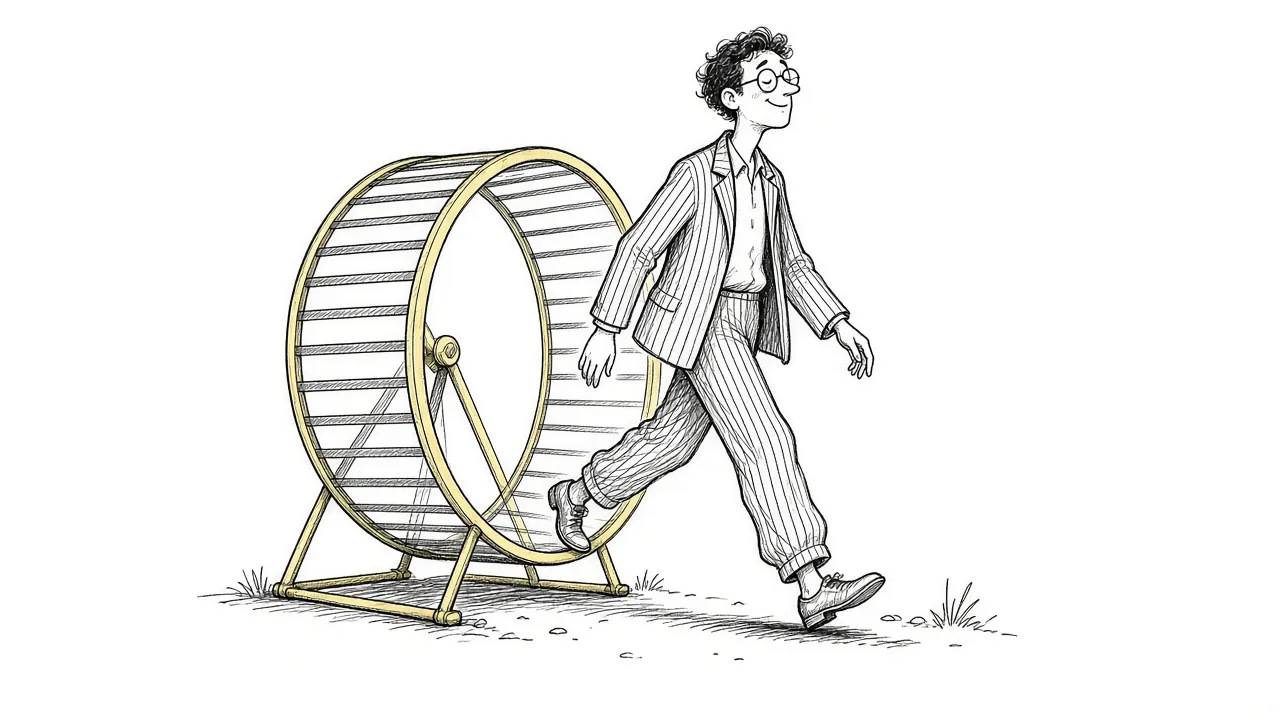
Rumination in Grief: Getting Off the "What If" Wheel
Endless what-ifs and if-onlys can trap grieving people. Learn why rumination happens and gentle ways to step off the wheel.