 murido
Rumination in Grief: Getting Off the "What If" Wheel

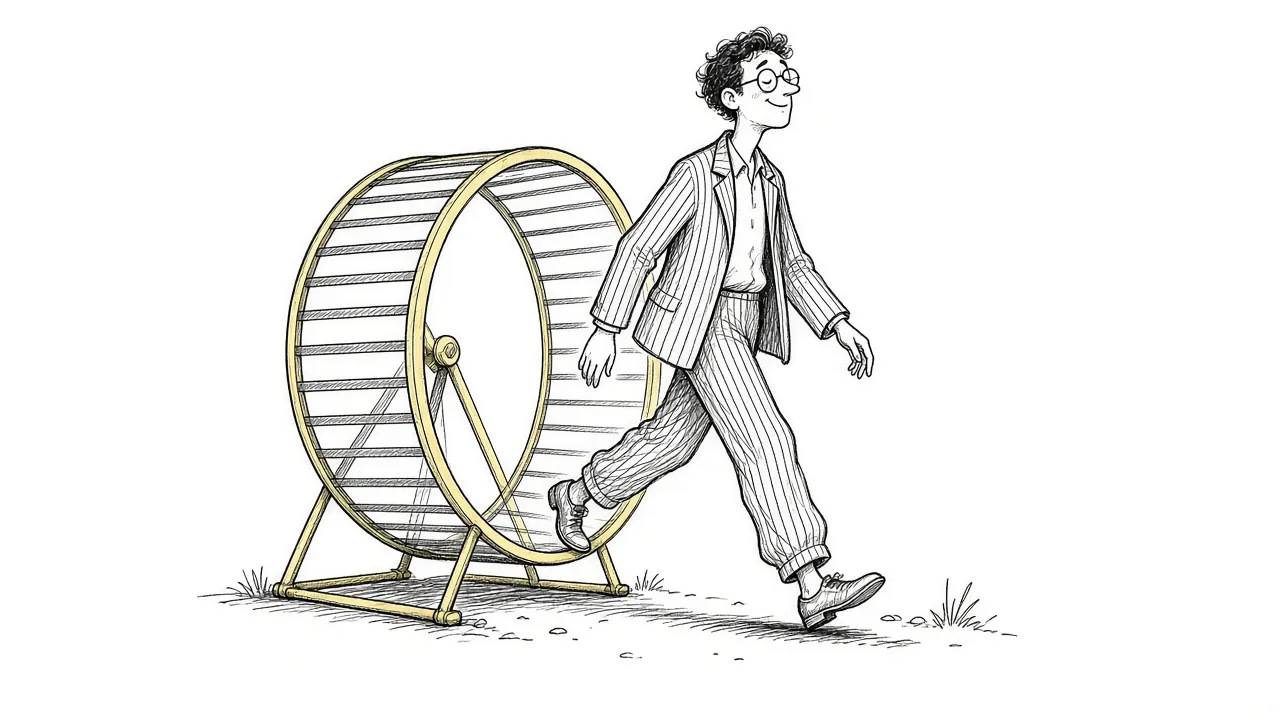
What if I had called that morning? What if I had pushed the doctors harder? What if I had noticed the signs? What if I had not said that last thing?
If your mind keeps circling questions like these, you are experiencing rumination, one of the most common and exhausting parts of grief. It can feel like trying to solve a puzzle with a missing piece. This guide explains why rumination happens, why it keeps you stuck, and how to gently step off the "what if" wheel.
What rumination is
Rumination is repetitive thinking about the same painful thoughts, questions, or memories. In grief, it often focuses on:
- The circumstances of the death
- What could have been done differently
- Why it happened
- Unresolved conflicts or last conversations
- The unfairness of the loss
Rumination feels like problem solving. It seems as though if you just think about it enough, you will find an answer. But rumination rarely leads to answers. It usually leads to more pain.
Why the mind ruminates
Searching for control
Death, especially sudden death, can leave people feeling powerless. Going over what could have been done differently can give a sense of control, even if it is an illusion.
Trying to make sense of it
The mind wants losses to make sense. When a death seems random or unfair, the mind keeps searching for a reason.
Guilt and responsibility
Many grieving people feel responsible in some way, even when they are not. Rumination is often guilt trying to work itself out. See Guilt After a Death.
Avoiding deeper feelings
Strangely, rumination can be a way of avoiding grief. Thinking about what went wrong can feel easier than feeling the raw sadness of the loss.
Rumination feels like searching for an answer. Often it is the mind's way of not yet accepting that there is no answer to find.
Why rumination keeps you stuck
Rumination tends to:
- Increase guilt and self-blame. The more you replay, the more you find to blame yourself for.
- Deepen sadness and anxiety. Repetitive negative thinking is linked to worse mood.
- Disrupt sleep. Many people ruminate most at night.
- Keep grief frozen. Focusing on the death can crowd out memories of the person's life.
- Pull you away from the present. It is hard to engage with life when your mind is constantly elsewhere.
Rumination versus reflection
Not all thinking about the loss is unhelpful. Reflection is different from rumination.
Reflection tends to be:
- Curious rather than accusing
- Open to many perspectives
- Moving toward understanding or meaning
- Something you can choose to start and stop
Rumination tends to be:
- Repetitive and circular
- Focused on blame and what went wrong
- Hard to stop once it starts
- Leaving you feeling worse
Asking "What did this person mean to me?" is reflection. Asking "Why did I not see it coming?" for the hundredth time is usually rumination.
Gentle ways off the wheel
1. Notice when it starts
The first step is simply noticing. "I am on the what-if wheel again." Naming it creates a small distance.
2. Do not argue with the thoughts
Trying to argue your way out of rumination often feeds it. Instead, try acknowledging the thought and letting it be there without engaging. "There is the what-if about the phone call."
3. Shift to the body
Rumination lives in the head. Moving attention to the body can interrupt it. Feel your feet, take a slow breath, notice the temperature of the air.
4. Schedule worry time
Some people find it helpful to set aside 15 minutes a day to let the what-ifs out, perhaps by writing them down. When rumination appears at other times, remind yourself you will come back to it during that time.
5. Write the questions down
Putting the questions on paper can take some of their power. You might notice how many times you have asked the same thing. You might also write what a kind friend would say in response.
6. Talk to someone
Saying the questions out loud to someone you trust can help. Often, hearing yourself say them, or hearing another perspective, breaks the loop.
7. Return to their life, not only their death
Deliberately bringing up memories of the person's life, not just the end, can rebalance your thoughts. Look at photos from good times. Tell a story about them.
When the questions have no answers
Some what-ifs will never be answered. You may never know whether a different decision would have changed anything. Learning to live with that uncertainty is one of the hardest parts of grief. See Living With Unanswered Questions After a Death.
It can help to remember that you made decisions with the information you had at the time. Hindsight creates a clarity that was not available in the moment.
A short exercise for night rumination
Nights are when the wheel spins fastest for many people. If you wake up circling, try this:
- Sit up and turn on a dim light.
- Write the question that is looping, exactly as it sounds in your head.
- Under it, write "I did not know then what I know now."
- Write one thing you loved about them.
- Put the paper down, take five slow breaths, and lie back down.
It will not always work. But it gives the mind somewhere to put the question so it does not have to keep holding it.
When to seek more help
Rumination is common in grief, but if it is constant, intense, or making daily life very difficult, a counselor can help. Approaches like cognitive behavioral therapy and acceptance-based therapies have tools designed for rumination.
If rumination brings thoughts of harming yourself or ending your life, please reach out right away. Call or text 988 to talk with someone at the Suicide and Crisis Lifeline.
A gentle experiment for tonight
If your mind tends to loop in the evening, try a small experiment for one week. Keep a notebook by the bed. When a looping thought arrives, write it down in one sentence, exactly as your mind says it. Then write one line underneath that begins with "What I actually need right now is..." You might find the answer is rest, comfort, a glass of water, or simply to miss them out loud.
At the end of the week, read back through the notebook. Many people notice the same few thoughts repeating. Seeing them on paper can make them feel less like urgent problems and more like familiar visitors. You can greet them, note that they came, and let them go back out the door without arguing.
If the loops ease even a little, keep going. If they get louder, that is useful information too, and a good reason to bring them to a counselor.
Stepping off, gently
You may not be able to stop the what-ifs completely, and that is okay. The goal is not to never think about it. The goal is for the questions to have less hold on you, so there is more room for remembering the person you loved and for living your own life. Every time you notice the wheel and gently step off, you are practicing something that, over time, can make grief a little lighter.
This article is for general information and support. It is not medical or mental health advice. If grief has become unbearable or you are thinking about harming yourself, call or text 988 right now.
Related reading

Grief Alongside Depression and Anxiety
Grief often arrives alongside other mental health challenges. How to recognize overlap and get support for all of it.

Why Your Brain Keeps Replaying Their Last Days
Memories of the final days or moments can loop relentlessly. Here is why that happens and how to let the rest of their life back in.

Grief Waves: Why It Comes Back and How to Ride It Out
Just when things feel steadier, a wave of grief hits. Why grief comes in waves and practical ways to get through them.