 murido
Self-Compassion in Grief
Grief is hard enough on its own. But many grieving people add another layer of pain by being harsh with themselves. They criticize how they are grieving, how long it is taking, how they handled the death, or how they are coping now. "I should be over this." "I should have done more." "What is wrong with me?"
Self compassion offers another way. It means treating yourself with the same kindness, patience, and understanding you would offer a friend who was grieving. This guide explores what self compassion looks like in grief, why it matters, and simple ways to practice it.
What self compassion is
Self compassion is often described as having three parts:
- Kindness toward yourself, rather than harsh judgment.
- Recognizing shared humanity, knowing that suffering is part of being human and you are not alone.
- Mindful awareness, noticing your pain without ignoring it or being swept away by it.
In grief, self compassion might sound like, "This is so painful. Many people who lose someone they love feel this way. I am going to be gentle with myself right now."
You would never tell a grieving friend they are doing it wrong. You deserve the same kindness.
Why grieving people are often hard on themselves
There are many reasons grieving people turn on themselves.
- Guilt. Many people blame themselves for the death or for things left unsaid. Our guide to guilt after a death explores this.
- Expectations. You may believe grief should look a certain way or end by a certain time.
- Comparison. Others may seem to be coping better.
- Cultural messages. You may have learned that strong people do not cry or need help.
- Frustration. Grief can make it hard to focus, remember things, or function as you used to.
These pressures can make grief heavier.
Why self compassion helps
Self compassion does not make grief go away. But it can change how you experience it.
It reduces added suffering
When you criticize yourself for grieving, you add shame and frustration to an already heavy load. Self compassion can lift some of that extra weight.
It helps feelings move
Being kind to yourself can make it easier to allow painful feelings. When you are not fighting yourself, grief may move more naturally.
It supports resilience
People who treat themselves kindly during hard times often find it easier to keep going, try new things, and reach out for support.
It honors your love
Self compassion recognizes that grief is a reflection of love. It allows you to hold your pain with tenderness.
Simple self compassion practices
You do not need special training to practice self compassion. Here are some simple ways to begin.
Speak to yourself as a friend
When you notice harsh self talk, pause and ask, "What would I say to a friend who felt this way?" Then try saying those words to yourself. For example:
- Instead of "I should be over this," try "Of course I am still grieving. I loved them so much."
- Instead of "I am a mess," try "I am doing the best I can in a very hard time."
- Instead of "I should have done more," try "I did what I could with what I knew."
Place a hand on your heart
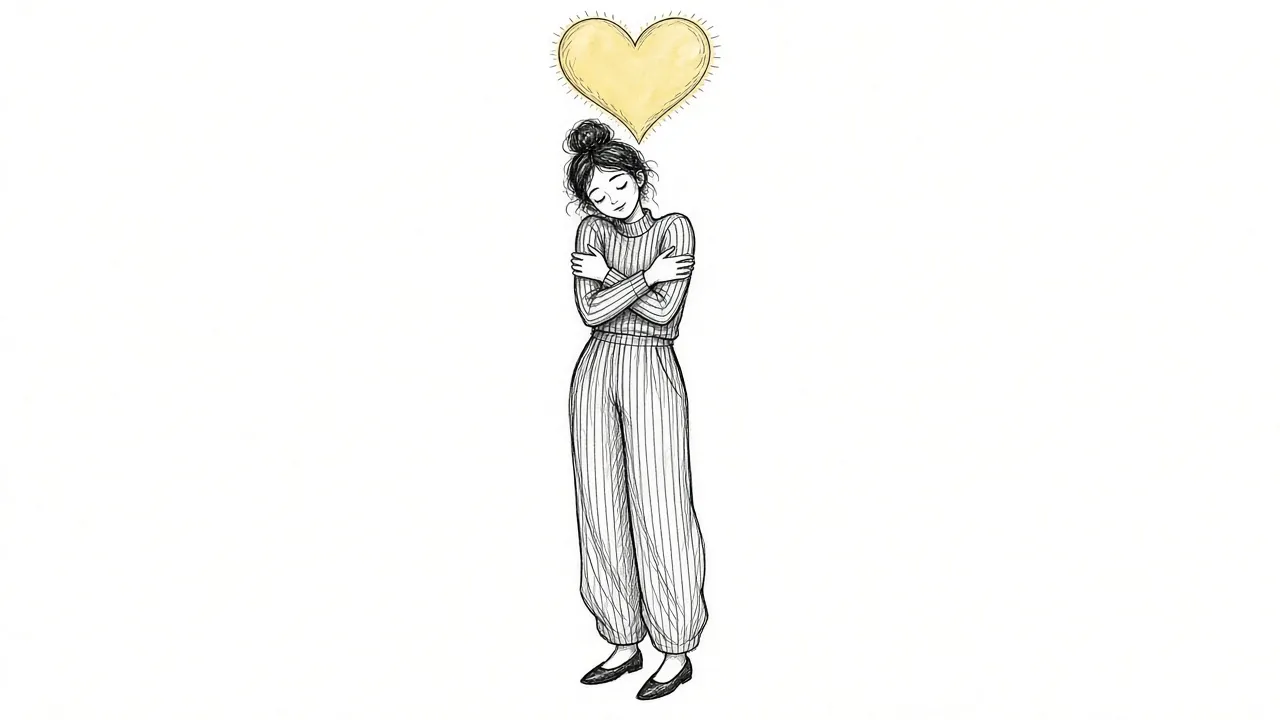
Physical gestures of kindness can be calming. Try placing a hand on your heart or giving yourself a gentle hug. Notice the warmth. You might say, "This is hard. I am here for myself."
Use a self compassion phrase
Some people find it helpful to have a short phrase to repeat during hard moments, such as:
- "May I be gentle with myself."
- "This is a moment of grief. Grief is part of love."
- "I am not alone in this."
Write a compassionate letter
Write a letter to yourself from the perspective of someone who loves you unconditionally. That might be a friend, a family member, or even the person who died. What would they say about how you are coping? What would they want you to know?
Lower the bar
On hard days, give yourself permission to do less. Rest. Order takeout. Skip the chores. Grief is demanding, and you do not need to function at full capacity.
Notice small wins
Acknowledge the small things you manage each day: getting out of bed, eating a meal, making a phone call. These are real accomplishments in grief.
Self compassion and guilt
Guilt is one of the hardest feelings to meet with compassion. When you feel you did something wrong, kindness can feel undeserved.
But self compassion does not mean pretending you made no mistakes. It means recognizing that you are human, that you acted with the knowledge you had at the time, and that you deserve kindness even when you have regrets. It also means noticing that the depth of your guilt often reflects the depth of your love.
Self compassion and comparison
It is common to compare your grief to others. Someone else seems to be back at work, laughing, or moving on. You might wonder what is wrong with you.
Every grief is different. The relationship, the circumstances, your history, and your support all shape how grief unfolds. Comparing yourself to others rarely reflects the full picture. Self compassion reminds you that your grief is yours, and it does not have to look like anyone else's.
When self compassion feels hard
For some people, being kind to themselves feels uncomfortable or even impossible. You might feel undeserving, or worry that being gentle will make you weak.
If this is true for you, start very small. Notice moments when you are harsh with yourself, without trying to change anything yet. Over time, you might experiment with one gentle phrase or gesture.
Self compassion is a practice, not a feeling you must already have. It grows with repetition.
Self compassion alongside other support
Self compassion pairs well with other forms of grief support. You might combine it with:
- Mindful grieving practices.
- Talking with a counselor or support group.
- Rituals that honor your loved one.
- Gentle physical care, like rest and nourishing food.
If grief feels overwhelming, our guide to when grief feels overwhelming offers more ideas.
A three breath pause
When self criticism shows up in the middle of a busy day, a long practice may not be possible. A three breath pause can fit almost anywhere.
- First breath: notice what you are feeling. "This is grief. This hurts."
- Second breath: remember you are not alone. "Many people who have lost someone feel exactly this."
- Third breath: offer yourself one kind sentence. "I can be gentle with myself right now."
That is all. It takes less than a minute, and no one around you needs to know you are doing it. Repeated over days and weeks, these small pauses can slowly soften the harsh voice that tells you that you are grieving wrong.
Being on your own side
Grief can make you feel as though you are fighting the world. Self compassion invites you to stop fighting yourself. To be on your own side. To recognize that you are carrying something very heavy and that you deserve care while you carry it.
You loved someone. You lost them. Of course it hurts. Of course you are struggling. Let yourself be held, even if only by your own gentle words, while you find your way through.
This article is for general information and support. It is not medical or mental health advice. If grief has become unbearable or you are thinking about harming yourself, call or text 988 right now.
Related reading
Acceptance and Remembrance: Two Ideas That Shape Healthy Grief
How acceptance and remembrance work together to help people carry grief while staying connected to the person they lost.
Coping With Grief: A Practical Guide
Practical, everyday ways to cope with grief, from the first days through the months and years that follow.
Why Traditional Grief Advice Falls Short
Let go, stay busy, get closure. Why some traditional grief advice misses the mark and what to try instead.